
Jio Platforms Ltd, the digital and telecommunications arm of Reliance Industries, has received board approval to file draft papers for an initial public offering (IPO) involving a fresh issue of up to 27 crore equity shares. The draft red herring prospectus (DRHP) is expected to be filed with SEBI today, marking a significant value-creation event for Reliance shareholders.

LIC is the only brand in the Brand Finance India 100 2026 report that has a top five rank in both brand value and brand strength.

Indian benchmark indices Sensex and Nifty extended their winning streak to a fourth consecutive day, driven by strong buying in blue-chip bank stocks and a decline in global crude oil prices. Fresh foreign fund inflows also contributed to the optimistic sentiment in the domestic equity market.

India's hydropower generation has been significantly constrained in July due to the El Nio effect, which has weakened the southwest monsoon and reduced reservoir levels. This decline, following a 21 per cent year-on-year drop in June 2026, is forcing greater reliance on coal generation and straining grid flexibility amidst rising power demand.

Indian benchmark indices, Sensex and Nifty, extended their losses for a second consecutive day, primarily due to HDFC Bank's disappointing quarterly earnings and escalating tensions in West Asia, coupled with persistent foreign fund outflows.

A tree collapsed in front of industrialist Mukesh Ambani's security convoy in Mumbai's Bandra area amidst torrential rains, briefly obstructing traffic. The incident highlights the widespread rain-related disruptions, including falling trees and traffic snarls, prompting civic authorities to issue caution.

Indian benchmark indices Sensex and Nifty recorded their third consecutive day of gains, primarily driven by an over 8 per cent surge in Bajaj Finance following strong Q1 FY27 results, coupled with significant foreign fund inflows and a dip in crude oil prices.

Indian benchmark equity indices, Sensex and Nifty, ended lower after a five-day rally, with the Sensex dropping 607 points and the Nifty falling to 24,013.10. The decline was primarily driven by heavy selling in IT firms following Accenture's trimmed revenue guidance and renewed geopolitical uncertainty, specifically the postponement of US-Iran negotiations.

Indian benchmark equity indices, Sensex and Nifty, rebounded on Wednesday, recovering intraday losses, primarily driven by strong fag-end buying and a significant rally in blue-chip Reliance Industries.

Indian benchmark indices Sensex and Nifty ended flat on Tuesday, with the Sensex dipping nearly 70 points, as investor sentiment turned cautious ahead of crucial global central bank policy meetings and a significant sell-off in Asian markets.

Indian benchmark indices Sensex and Nifty rallied in early trade, primarily driven by strong buying in IT stocks after Tech Mahindra reported a significant 28.4 per cent rise in its consolidated net profit for the June quarter.

Indian benchmark indices Sensex and Nifty ended a four-day rally, closing lower on Tuesday following the introduction of a new Closing Auction Session (CAS) for F&O stocks, which has added a layer of volatility and led to an early adjustment in market structure.
Indian benchmark indices Sensex and Nifty experienced a downturn in early trade, primarily influenced by a dip in HDFC Bank shares, persistent outflows from foreign funds, and escalating geopolitical tensions between the US and Iran. Track Sensex, Nifty performance.

Brokerages are forecasting a strong first quarter (April-June/Q1) for Reliance Industries Ltd (RIL) in FY2026-27, with double-digit revenue growth, Ebitda increases of around 12 per cent, and net profit rising up to 10 per cent, primarily driven by its oil-to-chemicals (O2C), retail, and Jio businesses.

Prime Minister Narendra Modi, addressing the nation from the Red Fort on Independence Day, declared that India is undergoing a rapid transformation across various sectors and is firmly on track to become a developed nation by 2047.

Reliance Industries Ltd (RIL) has expressed caution regarding 'extreme volatility' risks stemming from the West Asian conflict, which could impact global oil demand and the company's margins, while also noting that near-term retail consumption demand may remain sensitive to macro conditions. Chairman Mukesh Ambani, in the annual report, remained silent on the timeline for Jio Platforms' anticipated public listing, stating the group will 'continue to evaluate strategic pathways'.
Investors are keenly awaiting clarity on Reliance Jio Infocomm's IPO, the company's AI and data centre strategies, and next-generation leadership structure at Reliance Industries Ltd's (RIL's) 49th annual general meeting (AGM).

Nearly 50 per cent of the stocks that comprise the Nifty 50 are trading below their respective 200-DMAs.

The Reserve Bank of India (RBI) maintained its key policy rates for the fourth consecutive time, keeping the repo rate at 5.25 per cent, while the benchmark BSE Sensex closed 152 points higher in a volatile session, recovering from an intraday dip.

Bharti Airtel added 7.64 trillion in value over the past five years, making it the biggest wealth creator in India's private sector, while the IT sector, including TCS, Infosys, and Wipro, collectively lost 8.5 trillion in value, according to the latest Burgundy Private Hurun India 500 report.

Mukesh Ambani, Asia's second richest man, has not drawn a salary from Reliance Industries for the sixth consecutive year, with dividends from his extensive shareholdings serving as his primary source of income.

Instant messaging platform Telegram has been restored in India after a week-long government ban, imposed due to its alleged role in circulating leaked NEET examination papers, expired. The Delhi High Court had upheld the ban as lawful and necessary.

The combined market valuation of four of India's top-10 most valued firms, including State Bank of India, Bharti Airtel, Tata Consultancy Services, and Larsen & Toubro, eroded by Rs 1 lakh crore last week amidst a volatile and range-bound equity market.

A new study by The Energy & Climate Initiative Society (ENCIS) predicts that AI adoption in India's power generation sector will surge from 35% to 65% by 2030, becoming a core operational capability. The study highlights that nearly seven out of ten professionals see power generation as offering the best opportunity for efficiency gains through AI, driven by India's expanding digital infrastructure and significant investments from energy giants. Predictive asset management and proactive maintenance are identified as key areas for AI application, with efficiency being the primary driver for AI investments.

India's fresh investment plans in Q1FY27 surged 71 per cent to 14.77 trillion, primarily driven by four large nuclear power projects worth 6.5 trillion, according to investment monitoring firm Projects Today. Excluding these nuclear projects, fresh investment plans actually declined 4.27 per cent quarter-on-quarter.

Air Chief Marshal A P Singh, the IAF chief, has strongly advocated for India to achieve greater self-reliance in unmanned aerial systems and other critical defence technologies, stating, "Technology delayed is technology denied." He stressed the importance of indigenous development to avoid dependency on other countries for components.

Despite a population of 1.45 billion, India's football team is ranked a lowly 138th in the world and failed to qualify for next year's Asian Cup, highlighting deep-rooted systemic issues and a failure to implement reforms that keep the World Cup dream distant for fans.

Indian benchmark indices, Sensex and Nifty, closed lower due to profit-taking after a four-day rally, influenced by weakness in Asian markets, with Trent shares tumbling over 12 per cent.

Indian stock market benchmarks, Sensex and Nifty, saw gains in early trading, driven by anticipation surrounding the Reserve Bank of India's monetary policy decision, despite mixed global cues and significant FII outflows.
Merlinhawk Aerospace has partnered with Boeing India Defence to provide in-country maintenance, repair, and lifecycle support for advanced Electro-Optical/Infrared (EO/IR) systems on Indian military platforms. This collaboration aims to strengthen local support, reduce turnaround times, and enhance mission readiness for the Indian Navy, aligning with India's self-reliance goals in defence.
Merlinhawk Aerospace has partnered with Boeing India Defence to provide in-country maintenance, repair, and lifecycle support for advanced Electro-Optical/Infrared (EO/IR) systems on Indian military platforms. This collaboration aims to strengthen local support, reduce turnaround times, and enhance mission readiness for the Indian Navy, aligning with India's self-reliance goals in defence.

A new report highlights that publishers need to adopt clear records, AI-specific provisions, and transparent disclosure of AI use to manage legal and commercial risks as the copyright framework around artificial intelligence evolves. Jointly developed by SS Rana & Co and Ficci, the 'Copyright In The AI Age' report emphasises practical governance measures while courts and regulators work on legal principles. It also addresses concerns about authorship, creators' rights, and research integrity amidst increasing AI integration in publishing.

Indian benchmark indices Sensex and Nifty closed lower for the second consecutive day, driven by investor caution over conflicting geopolitical signals from West Asia and fresh foreign institutional investor (FII) outflows.

Market benchmark indices Sensex and Nifty drifted lower in early trade on Monday amid renewed hostilities between the US and Iran. The 30-share BSE Sensex declined 63.65 points to 77,047.63 during initial trading. The 50-share NSE Nifty went marginally up by 16.55 points to 24,070.20. Later, the BSE benchmark dropped 246.54 points to 76,853.93, and the Nifty dipped 50.55 points to 24,005.45. Track Sensex, Nifty on June 29.

Indian benchmark stock indices Sensex and Nifty rebounded nearly 1 per cent, snapping a three-day decline, driven by rallies in Reliance Industries and Sun Pharma, alongside positive global market trends and easing geopolitical tensions.

The Indian government has issued a stern warning to industrial users who are reportedly procuring cheaper retail fuel instead of industrial-grade fuel, leading to significant losses for state-run oil marketing companies (OMCs) and potential local shortages. This diversion, driven by a substantial price difference between retail and bulk diesel, is adversely impacting OMCs, which are absorbing daily losses of approximately 550 crore to keep retail prices stable.
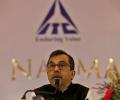
ITC's move to hive off its hotel business will have implications for passive funds and exchange traded funds (ETFs) similar to that seen during the Reliance Industries-Jio Financial demerger. As ITC is part of popular indices such as Nifty and Sensex, it is held by several index funds and ETFs.

Jio Platforms managing director Akash Ambani announced plans for Jio to develop a sovereign Low Earth Orbit (LEO) satellite constellation and partner with global providers to extend connectivity to remote areas of India, aiming to strengthen India's self-reliance in space.

Cricket's inclusion in the 2028 Los Angeles Olympics is a strategic move by Olympic leaders to tap into India's massive fan base and commercial power, aiming to attract billions of new viewers and strengthen the Games' appeal in key markets.

The Nifty's stunning 200-point jump in the final minute of trading wasn't a glitch. It marked India's shift to a new, globally accepted system of end-of-day price discovery.
